
WEBINAR SUMMARY “AUTOLOGISTICS ON THE BORDER: WHO WILL SURVIVE IN 2026?”: ADAPTATION STRATEGIES IN THE CONDITIONS OF FALLING MARGINALITY
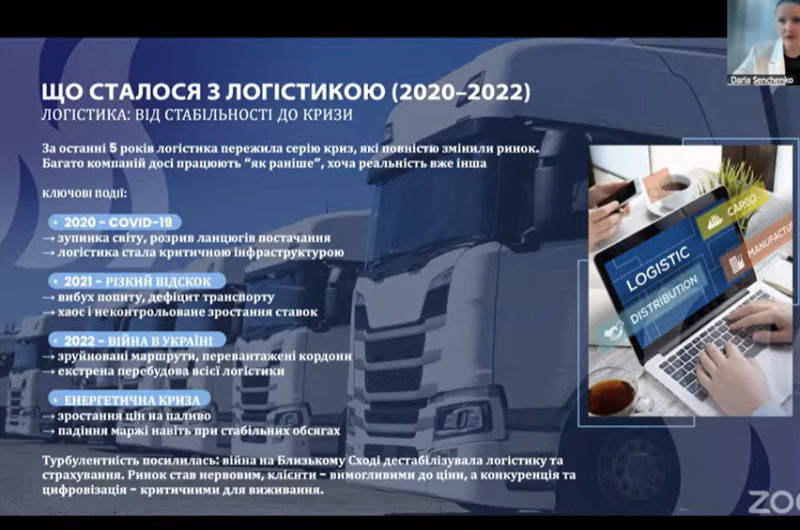
Last Wednesday, a landmark event for the Ukrainian logistics community took place - a webinar with the participation of Daria Senchenko, Head of Land Transportation at Boxline UCL Ukraine. An expert with 18 years of experience presented a tough but realistic analysis of what is happening with the road transportation market right now and what to expect in the next two years.
The main challenge: Why do the “old” schemes no longer work?
The key message of the meeting: the marginality of the logistics business is rapidly falling not only due to external factors, but also due to outdated management models. Daria Senchenko emphasized that the classic approach of “just finding a car and reselling the freight” leads companies to the risk zone.
Key theses of the speech:
1. New reality 2025–2026: The market is becoming more transparent and at the same time more complex. Forwarders who do not add real value to the process (analytics, risk management, IT integration) will be the first to lose their positions.
2. Where does profit disappear? Unobvious losses are often hidden in ineffective route planning, lack of automation of cost control and ignoring hidden operational risks.
3. Antifragility instead of survival: The speaker presented business models focused on growth in turbulent conditions. This is a transition from the “executor” model to the “strategic partner” model for the client.
Practical steps for business for tomorrow:
At the end of the webinar, participants received a specific action plan for adapting processes:
• Digitalization: Transition from Excel to integrated logistics management systems.
• Review of the client portfolio: Working with those who value reliability and technologicality, not just the lowest price.
• Flexibility of operations: The ability to instantly review logistics chains in response to market changes.
"Logistics today is not about the number of trucks, but about the speed of decision-making and an intelligent approach to resources," noted Daria Senchenko.