
Important news regarding automotive logistics and European regulation
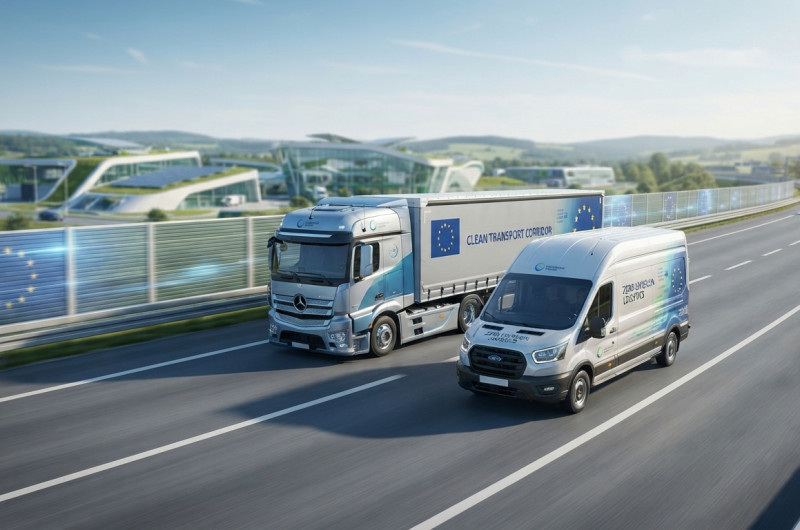
Berlin and Paris propose relaxing environmental requirements to strike a balance between decarbonization and protecting the competitiveness of the European automotive industry.
Key elements of the compromise include:
???? Adjustment of CO₂ emission targets: Instead of a total ban on internal combustion engine (ICE) vehicles and a 100% reduction in emissions by 2035, the proposal suggests setting the target at 90%. This would allow for the continued sale of new gasoline and diesel vehicles beyond 2035.
???? Flexibility for commercial vehicles (LCVs): The proposal suggests introducing a five-year averaging period for 2025 environmental targets—accounting for the slower adoption of electric vans—as well as averaging emissions for the 2030–2031 period.
???? Clean Corporate Vehicles (CCV): France and Germany advocate for replacing mandatory national targets regarding the share of eco-friendly vehicles in corporate fleets with indicative (non-binding) targets.
Meanwhile, within the European Parliament, the EPP, S&D, and Renew groups have already reached a similar compromise on CCV, also supporting non-binding targets. However, Members of the European Parliament (MEPs) plan to restrict public financial support exclusively to corporate vehicles that meet strict requirements for local production within the EU ("Made in Europe"). The future of the Automotive Package will be decided soon: a vote in the European Parliament’s Committee on the Environment (ENVI) is scheduled for November 4, 2026.
We are monitoring updates to EU legislation that will directly impact international transport operations and the renewal of commercial vehicle fleets.