
ROAD TRANSPORT INDUSTRY LEADERS CALL FOR IMPROVED TRANSPORT CONNECTIVITY IN THE BLACK SEA REGION
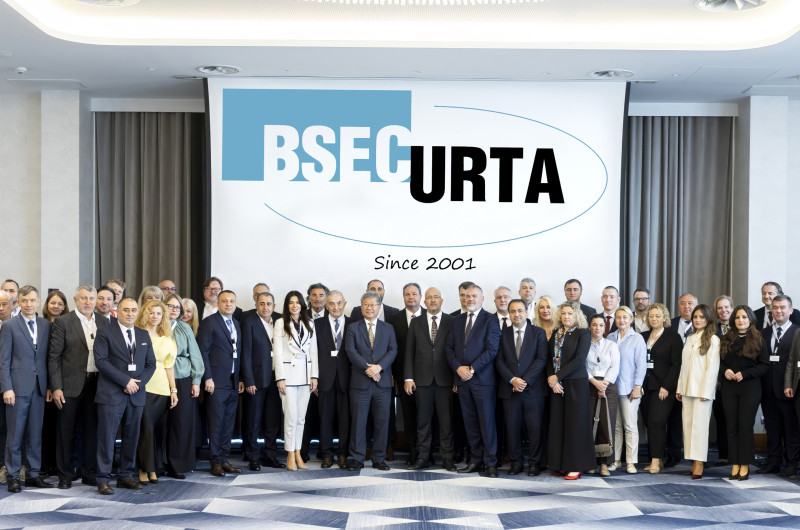
At the 47th BSEC-URTA General Assembly, transport leaders and industry representatives highlighted the growing strategic importance of the Black Sea region as a key bridge connecting Europe, the Caucasus, Central Asia, the Middle East and the Gulf Cooperation Council (GCC) region.
Hosted by IRU member OFAE in Thessaloniki, Greece, the 47th BSEC-URTA General Assembly focused on transport connectivity, digitalization, border facilitation, sustainable development and operational challenges faced by transport operators across the region.
Opening the General Assembly, IRU President Radu Dinescu stressed that geopolitical tensions, rising fuel prices, driver shortages, border crossing difficulties and visa issues continue to put pressure on transport operators across the region. Closer regional cooperation, smarter border management and practical measures to simplify procedures are needed to ensure sustainable and efficient transport operations.
IRU Secretary-General Humberto De Pretto outlined how the Black Sea region has emerged as one of the world’s most important transport and logistics bridges over the past three decades. He highlighted the growing importance of the Middle Corridor, new transport opportunities through Iraq and strengthening connectivity with the GCC countries amid regional turmoil.
Both IRU leaders stressed the importance of digitalization initiatives such as TIR-EPD, eTIR and eCMR to reduce waiting times, increase transparency and ensure greater predictability and efficiency in transport operations across the region. IRU also reaffirmed its support for coordinated border management, risk-based controls and TIR “green corridors” to facilitate border crossings.
Particular attention was paid to recent developments in the Middle East and the growing role of the TIR system in strengthening regional connectivity. For example, almost 2,000 TIR operations were processed through Iraq in the first year of the system’s operation.
New transport corridors and pilot operations in the Middle East are significantly reducing the time and cost of transport between Europe and the GCC countries.
Examples shared during the meeting included:
• Transport from Turkey to Kuwait is now completed in around four days instead of almost one month by sea.
• Delivery from Europe to the UAE takes around ten days by TIR truck compared to 35-40 days by sea and multimodal transport
• Benefits of the TIR “green corridor” between Saudi Arabia and the UAE, which has reduced border crossing times from 2-3 days to 4-6 hours
The IRU also reiterated the importance of resolving visa issues for drivers affecting international transport operations in both Europe and the GCC countries, calling for more practical, predictable and long-term visa solutions for professional drivers.
At the end of the meeting, the IRU and BSEC-URTA reaffirmed their commitment to working together to support more interconnected, digital and efficient transport systems in the Black Sea region and beyond.